
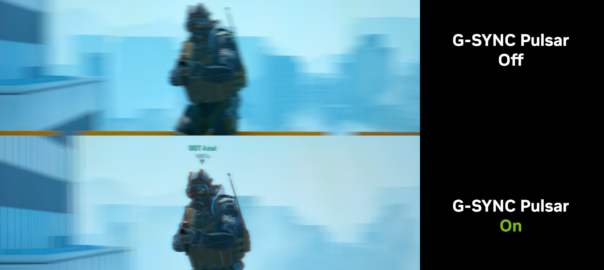
For competitive gamers, motion clarity is everything. When targets move across the screen at high speed, traditional displays struggle to keep images sharp, resulting in blur that can mean the difference between a headshot and a miss. At CES 2026, NVIDIA unveiled G-Sync Pulsar, a technology that promises to redefine how we perceive motion in games.
G-Sync Pulsar and the Pursuit of Perfect Motion
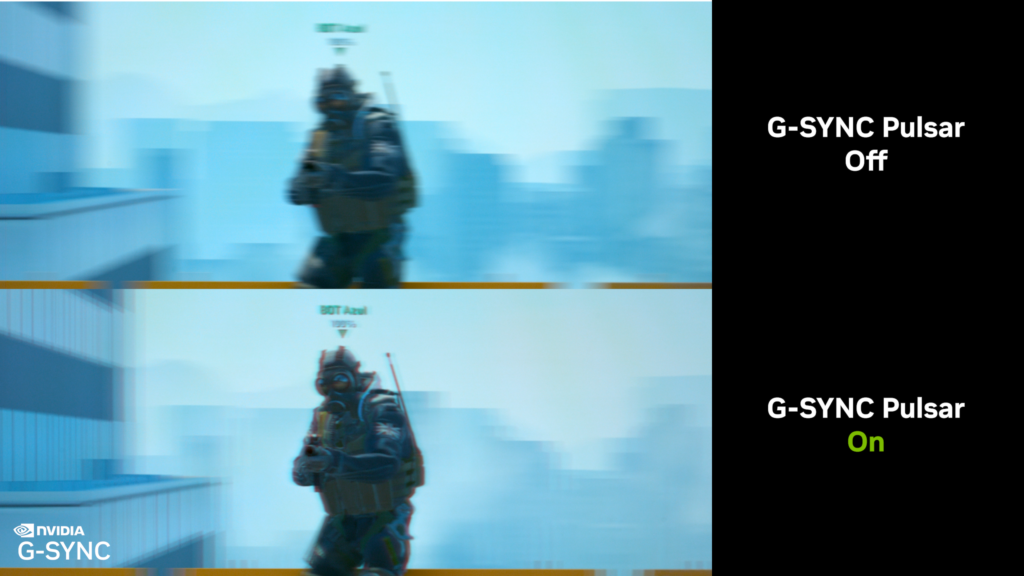

G-Sync Pulsar represents the evolution of variable refresh rate technology. Traditional G-Sync synchronizes the display’s refresh rate with the GPU’s frame output, eliminating screen tearing. However, motion blur remains an issue because pixels take time to transition between colors. Pulsar addresses this by combining variable refresh with backlight strobing—briefly flashing the backlight only after pixels have fully settled into their new state.
The effect is dramatic. A 360Hz monitor with G-Sync Pulsar enabled effectively provides motion clarity equivalent to a 1000Hz display running conventionally. Moving objects remain crisp and readable; text that would blur into unreadability stays sharp. In fast-paced games like Overwatch 2, this translates to tangible competitive advantage—enemies are easier to track, aiming becomes more precise.
The technology requires specialized hardware, which means new monitor purchases for those who want it. First-wave displays from ASUS, MSI, Acer, and AOC feature 27-inch IPS panels with 1440p resolution, 360Hz refresh rates, and up to 500 nits of HDR brightness. These aren’t budget options, but for serious competitors, the investment addresses a fundamental limitation of current display technology.
MSI’s implementation, the MPG 271KRAW16, pushes even further as the world’s first 5K Mini-LED gaming monitor. It delivers 165Hz at 5K resolution while supporting 330Hz at lower resolutions for competitive play. With 2,304 Mini-LED zones and VESA DisplayHDR 1400 certification, it serves double duty as both a gaming weapon and a creator-focused display.
The motion clarity revolution extends beyond monitors. NVIDIA also announced DLSS 4.5 at CES, introducing a second-generation Transformer-based Super Resolution model that improves temporal stability and reduces ghosting. Combined with Dynamic Multi Frame Generation, the technology pushes performance toward extreme refresh rates like 4K at 240Hz on next-generation RTX cards.
For esports athletes, G-Sync Pulsar represents the kind of incremental advantage that defines careers. For casual gamers, it promises a smoother, more immersive experience that makes games feel more responsive. Either way, the message from NVIDIA is clear: raw frame rates are only half the equation. How those frames appear in motion matters just as much.