Tag Archives: Gaming

Perfected Input Controller

Perfected Input Controller: Hall Effect, TMR, and the Death of Drift

Stick drift has plagued gamers for generations. The gradual degradation of potentiometer-based analog sticks leads to characters moving on their own, aiming reticles wandering off target, and controllers destined for landfills. At CES 2026, the industry finally declared war on this endemic problem with a wholesale shift toward magnetic sensing technologies.

Perfected Input Controller: Hall Effect, TMR, and the Death of Drift
Perfected Input Controller

Hall Effect sensors have been the enthusiast’s secret weapon for years. By using magnets to detect position without physical contact, these sensors eliminate the wear that causes drift. At CES 2026, Hall Effect went mainstream. The ASUS ROG Falchion Ace 75 HE keyboard showcased magnetic switches with actuation points adjustable down to 0.1mm, making strafing in competitive shooters feel “almost telepathic”. For DIY enthusiasts, the Corsair MAKR PRO 75 brought hot-swappable magnetic switches to a mainstream kit, allowing users to fine-tune exactly how deep a key press needs to register.

But Hall Effect is already evolving into something better. Tunnel Magnetoresistance (TMR) sensors represent the next generation of magnetic sensing technology. TMR offers even greater precision and dramatically lower power consumption than traditional Hall Effect. This efficiency matters enormously for wireless devices where battery life直接影响 usability.

HyperX’s Clutch Tachi leverless controller utilizes TMR sensors in its magnetic switches, ensuring frame-perfect inputs for fighting game competitors. The technology guarantees zero drift and consistent performance over the controller’s entire lifespan. For fighting game players practicing complex combos for hours daily, this reliability translates directly to competitive advantage.

The mobile gaming sector embraced magnetic sensing with particular enthusiasm. GameSir’s collaboration with Hyperkin produced the X5 Alteron, a controller that solves one of emulation’s biggest headaches: button layout compatibility. The device features fully modular, hot-swappable face plates. Playing GameCube games requiring that giant green A button? Snap in the appropriate module. Switching to an Xbox-style shooter layout? Swap back to the standard configuration. The controller adapts to the game rather than forcing compromises.

8BitDo brought innovation to portrait-mode gaming with the FlipPad, a controller that attaches to a phone’s bottom and flips up, creating a classic clamshell handheld reminiscent of the Game Boy Advance SP. For one-handed RPGs and vertical shooters long ignored by controller manufacturers, this form factor finally provides comfortable, drift-free input.

Razer’s Wolverine V3 Bluetooth, developed in partnership with LG, focused on wireless latency rather than drift elimination. Targeting sub-3ms response times, it makes cloud gaming on television feel indistinguishable from local console play. The “world’s fastest wireless gaming controller” moniker reflects a broader industry recognition that input lag matters as much as graphical fidelity.

The message from CES 2026 is unmistakable: the era of disposable controllers is ending. Magnetic sensing technology delivers durability that matches the lifespan of the consoles they serve. For gamers, this means buying fewer replacements, experiencing fewer frustrations, and enjoying input that remains precise years after purchase. Perfected input controller isn’t just an incremental improvement—it’s a fundamental upgrade to the gaming experience.
The HyperX OMEN Merger: One Brand to Rule Them All

The HyperX OMEN Merger: One Brand to Rule Them All

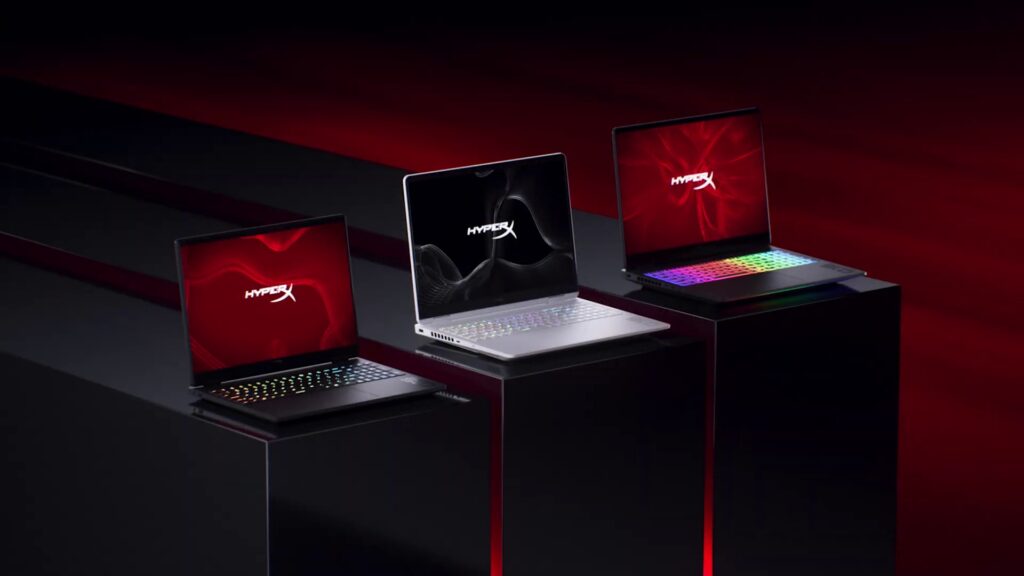
At CES 2026, HP announced a strategic shift that fundamentally redefines its gaming identity. HyperX and OMEN are officially coming together under one master brand: HyperX The unification consolidates decades of innovation in gaming PCs, displays, peripherals, and software into a single, end-to-end ecosystem designed to deliver “performance, personalization, and experiences that help every player reach their full potential”

The HyperX OMEN Merger: One Brand to Rule Them All

The HyperX OMEN Merger: One Brand to Rule Them All

The first fruits of this merger debuted prominently at the show. The HyperX OMEN MAX 16 positions itself as the world’s most powerful gaming laptop with fully internal cooling, delivering up to 300W total platform power—a 20% increase over the previous generation Power comes from Intel Core Ultra 200HX or AMD Ryzen AI processors paired with NVIDIA GeForce RTX 5090 laptop graphics. The redesigned OMEN Tempest Cooling Pro system adds a third fan and automated cleaning technology to maintain performance under sustained load.

Input responsiveness receives equal attention. The MAX 16 features an industry-leading high-polling rate keyboard delivering up to 4x faster polling than previous generations Full-size arrow keys and customizable OMEN Light Studio effects round out the player-focused design. A 16-inch OLED 240Hz display ensures visuals keep pace with the internal hardware.

Perhaps most intriguing is OMEN AI, which now offers personalized, one-click optimization for individual games. The AI adjusts operating system settings, hardware configurations, and in-game options simultaneously—eliminating the endless tweaking that plagues PC gaming For players who prefer playing to configuring, this alone justifies the premium positioning.

The display lineup expands with the HyperX OMEN OLED 34, a 34-inch QD-OLED monitor featuring next-generation V-stripe panel technology that reduces text fringing while delivering 360Hz refresh rates and 0.03ms response times HyperX ProLuma ensures professional-grade color precision, while a built-in KVM switch enables seamless multitasking between systems. Even the headphone hook is customizable via 3D printing.

Rounding out the ecosystem is the HyperX Clutch Tachi, an Xbox-licensed leverless controller designed for the fighting game community. Its magnetic switches with TMR sensors deliver lightning-fast inputs, while NGENUITY software enables extensive personalization The Clutch Tachi exemplifies HyperX’s new philosophy: specialized tools for specific gaming communities rather than one-size-fits-all peripherals.

Perhaps the most futuristic announcement involves neurotechnology. HyperX is partnering with Neurable to develop a gaming headset that interprets brain activity in real time, helping players improve focus and accuracy through AI analysis of EEG data If successful, this could represent the next frontier in competitive gaming—hardware that doesn’t just respond to inputs but understands the player’s cognitive state.

The HyperX-OMEN merger signals that HP sees gaming as an integrated experience rather than a collection of components. For players, the promise is seamless compatibility and unified software across an entire setup. For competitors, it’s a complete ecosystem designed to eliminate every possible disadvantage.

G-Sync Pulsar and the Pursuit of Perfect Motion

G-Sync Pulsar and the Pursuit of Perfect Motion

For competitive gamers, motion clarity is everything. When targets move across the screen at high speed, traditional displays struggle to keep images sharp, resulting in blur that can mean the difference between a headshot and a miss. At CES 2026, NVIDIA unveiled G-Sync Pulsar, a technology that promises to redefine how we perceive motion in games.

G-Sync Pulsar and the Pursuit of Perfect Motion

G-Sync Pulsar and the Pursuit of Perfect Motion

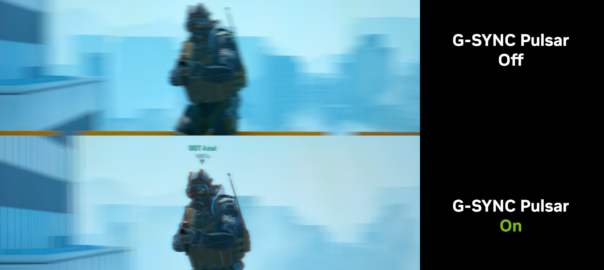
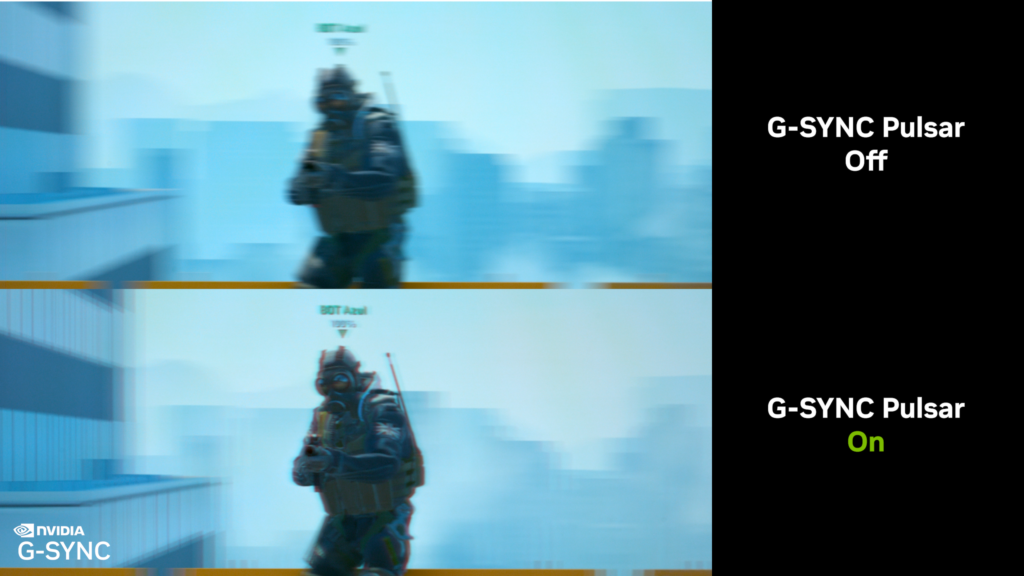
G-Sync Pulsar represents the evolution of variable refresh rate technology. Traditional G-Sync synchronizes the display’s refresh rate with the GPU’s frame output, eliminating screen tearing. However, motion blur remains an issue because pixels take time to transition between colors. Pulsar addresses this by combining variable refresh with backlight strobing—briefly flashing the backlight only after pixels have fully settled into their new state.

The effect is dramatic. A 360Hz monitor with G-Sync Pulsar enabled effectively provides motion clarity equivalent to a 1000Hz display running conventionally. Moving objects remain crisp and readable; text that would blur into unreadability stays sharp. In fast-paced games like Overwatch 2, this translates to tangible competitive advantage—enemies are easier to track, aiming becomes more precise.

The technology requires specialized hardware, which means new monitor purchases for those who want it. First-wave displays from ASUS, MSI, Acer, and AOC feature 27-inch IPS panels with 1440p resolution, 360Hz refresh rates, and up to 500 nits of HDR brightness. These aren’t budget options, but for serious competitors, the investment addresses a fundamental limitation of current display technology.

MSI’s implementation, the MPG 271KRAW16, pushes even further as the world’s first 5K Mini-LED gaming monitor. It delivers 165Hz at 5K resolution while supporting 330Hz at lower resolutions for competitive play. With 2,304 Mini-LED zones and VESA DisplayHDR 1400 certification, it serves double duty as both a gaming weapon and a creator-focused display.

The motion clarity revolution extends beyond monitors. NVIDIA also announced DLSS 4.5 at CES, introducing a second-generation Transformer-based Super Resolution model that improves temporal stability and reduces ghosting. Combined with Dynamic Multi Frame Generation, the technology pushes performance toward extreme refresh rates like 4K at 240Hz on next-generation RTX cards.

For esports athletes, G-Sync Pulsar represents the kind of incremental advantage that defines careers. For casual gamers, it promises a smoother, more immersive experience that makes games feel more responsive. Either way, the message from NVIDIA is clear: raw frame rates are only half the equation. How those frames appear in motion matters just as much.

Leverless Controllers

The Rise of Leverless Controllers

Walk onto the stage at any major fighting game tournament today, and you’ll notice something strange: many competitors aren’t using arcade sticks or standard gamepads. Instead, they’re tapping on flat panels of buttons resembling miniature keyboards. These “leverless” controllers have taken the competitive fighting game community by storm, and CES 2026 showcased the next generation of this specialized hardware.

The Rise of Leverless Controllers

Leverless Controllers

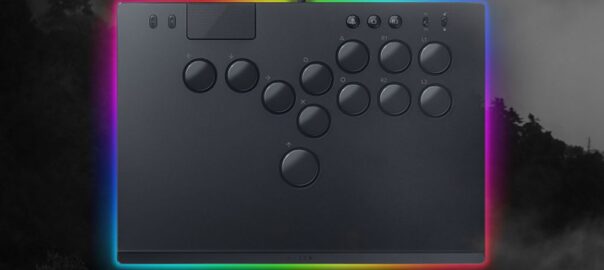
Leverless controllers abandon joysticks entirely. Directional inputs are mapped to buttons—typically the left hand handles movement via a cluster of keys, while the right hand manages attacks. This configuration enables techniques impossible on traditional hardware. As Chilean fighting game analyst and player Christian “Pochoclo23” Rosales explains, “By having direct access to all directions and being able to constantly switch stances, you can create very specific shortcuts and techniques that increase execution speed and effectiveness”.

The secret sauce involves SOCD (Simultaneous Opposite Cardinal Directions) cleaning—algorithms that interpret what should happen when a player presses left and right simultaneously. Tournament-legal leverless controllers implement specific SOCD rules that prevent unfair advantages while enabling techniques like perfect blocking and instant directional changes.

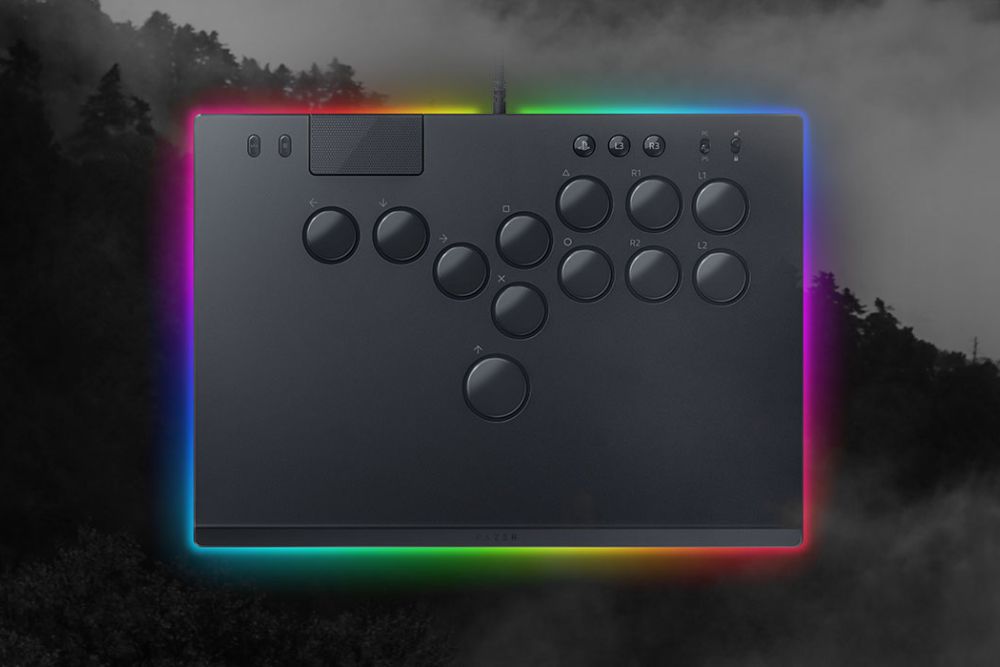
The Novablade Pro Wireless, unveiled at CES, represents the premium end of this emerging category. Licensed for PlayStation to avoid adapter-induced input lag, it features Hall Effect magnetic switches with Rapid Trigger technology for practically instantaneous response. The controller offers tri-mode connectivity (wired, 2.4GHz wireless, and Bluetooth), customizable RGB lighting, and aesthetic personalization options. At approximately €250, it’s positioned as a serious tool for serious competitors.

HyperX entered the leverless space with the Clutch Tachi, HP’s first Xbox-licensed arcade controller. Its premium leverless design combines magnetic switches with TMR (Tunnel Magnetoresistance) sensors—an evolution of Hall Effect technology that delivers even greater power efficiency and precision. Players can customize button mapping, adjust rapid trigger sensitivity, and even 3D print custom button shapes or top plate artwork through NGENUITY software. The fighting game community’s embrace of personalization suggests this DIY-friendly approach will resonate.

The appeal extends beyond professional players. Leverless controllers offer ergonomic benefits for gamers experiencing thumb fatigue from traditional gamepads. The button-based layout resembles typing, which many find more comfortable during long sessions. Additionally, the precision enables casual players to execute special moves consistently, lowering the barrier to enjoyment in complex fighting games.

Critics argue that leverless controllers represent an arms race, adding expense to an already costly hobby. But for players seeking every possible advantage, the technology delivers exactly what the name promises: execution without limits.

Lenovo Legion Go Fold: The Shape-Shifting Handheld

Lenovo Legion Go Fold: The Shape-Shifting Handheld

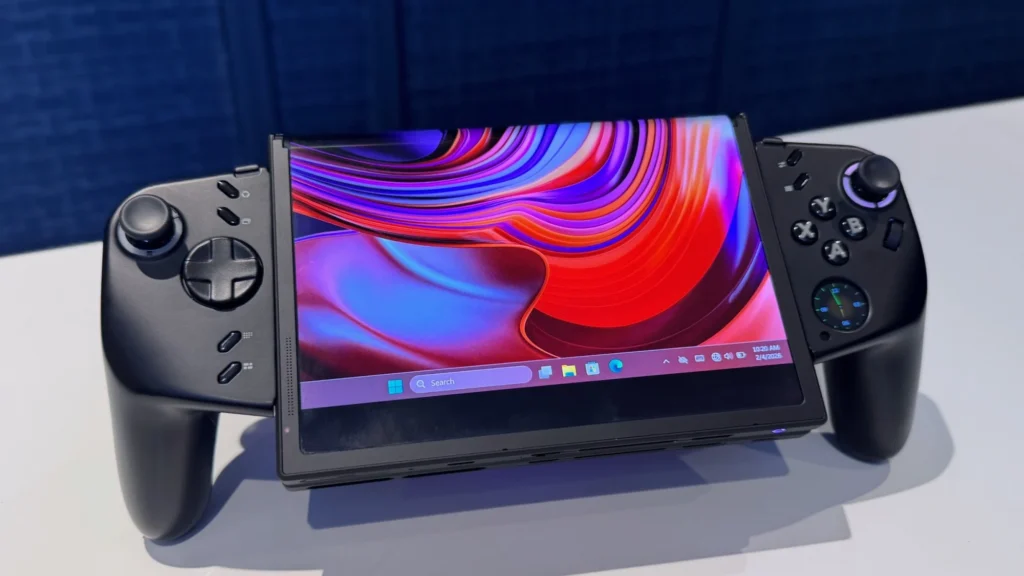
At Mobile World Congress 2026, Lenovo unveiled one of the most experimental gaming handheld concepts in recent memory. The Legion Go Fold is exactly what its name suggests—a Windows-based gaming device built around a foldable POLED display that transforms between multiple configurations. It represents Lenovo’s ambitious attempt to answer a fundamental question: what if a single device could be a handheld console, a tablet, and a laptop all at once?

Lenovo Legion Go Fold: The Shape-Shifting Handheld

Lenovo Legion Go Fold: The Shape-Shifting Handheld

The Legion Go Fold party trick is its hinge. When folded, it presents a 7.7-inch screen that feels like a traditional handheld, with detachable controllers snapping onto either side. Unfold it, and the display expands to 11.6 inches of usable real estate, transforming into a mini-tablet perfect for media consumption or touch-based games. The controllers themselves can attach in either landscape or portrait orientation, theoretically accommodating both widescreen games and vertical content like mobile shooters or social media streams.

Lenovo envisions multiple usage modes. In Handheld Mode, the device functions as a conventional portable console. Full Screen Mode unfolds the display horizontally for expansive single-screen gaming. Split-Screen Mode positions the screen vertically, allowing gamers to play on one half while streaming a walkthrough on the other. Desktop Mode attaches a detachable keyboard, effectively turning the Legion Go Fold into a Surface-style Windows laptop for productivity tasks.

Under the hood, the concept prototype runs on an Intel Core Ultra 7 258V Lunar Lake processor, backed by 32GB of RAM and a 48Wh battery. These specifications suggest reasonable performance for integrated graphics gaming, though serious gamers would likely demand more power. The 165Hz refresh rate on the foldable panel indicates Lenovo takes the gaming credentials seriously.

Hands-on impressions from early testers reveal both promise and rough edges. Mashable’s editor described the foldable screen as “really frickin’ cool” and noted the device is “surprisingly light”. However, PCMag’s hands-on raised concerns about build quality—the controller attachment mechanism felt wobbly, and the trifold kickstand cover proved frustrating to deploy correctly. As a prototype, these issues may be resolved before any potential commercial release.

The bigger question is whether the Legion Go Fold solves a real problem. PCMag questioned whether it fills any need that an existing tablet or handheld couldn’t address better. Yet Lenovo’s pitch—targeting gamers who lack hours to sit before a TV or don’t want to juggle separate work and play devices while traveling—has merit. With a starting price likely exceeding the $1,099 Legion Go 2, the Fold would need to execute flawlessly to justify its premium.

Lenovo has a track record of bringing concepts to market, so the Legion Go Fold may eventually become reality. Whether it succeeds or not, the device demonstrates that the handheld gaming category remains fertile ground for radical experimentation.